What’s Wrong with Living in the Matrix?
We often hear people say, “We’re living in a Matrix.” It has become a popular metaphor for illusion — a simulated world that hides the real truth behind flickering pixels of perception. The phrase has moved beyond the movie and seeped into philosophy, science, and spirituality. Everyone seems to be chasing the same dream: to wake up from this so-called illusion. But here’s a question worth asking — what’s so wrong with living in the Matrix in the first place?
If life truly is a simulation — a cosmic video game crafted by consciousness, a divine experiment in experience — then perhaps the first question isn’t how to escape it, but how to live meaningfully within it. Because if you can’t find happiness, peace, and purpose inside the Matrix, what makes you think that liberation outside of it will magically fix that? Imagine you wake up tomorrow and discover that life, as you know it, is a program. The streets, the people, even your body — all digital code. What changes, really? You’d still feel hunger, still crave love, still struggle to find meaning in your actions. You might gain new awareness, but the human condition remains. Awakening is not about leaving the Matrix; it’s about seeing it for what it is — an intricate illusion meant to teach awareness through experience.
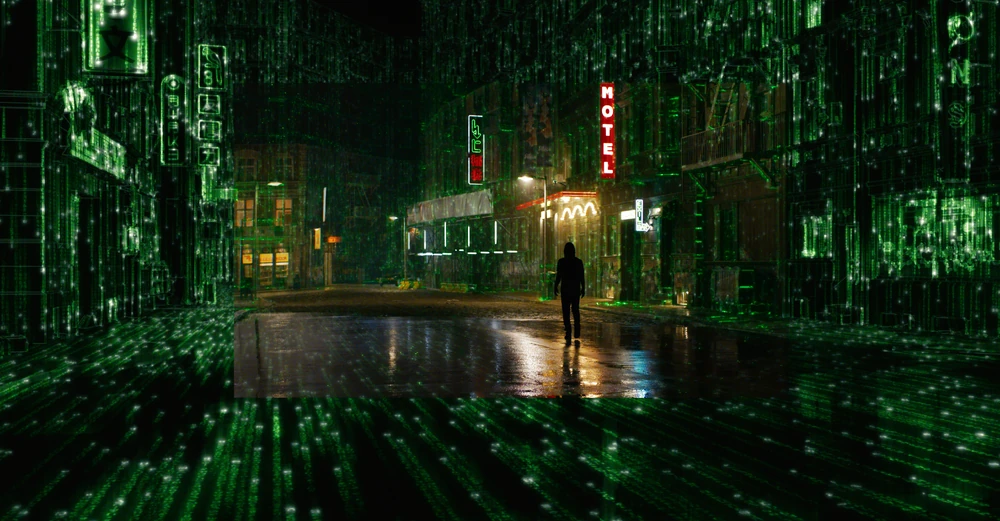
The truth is, misery isn’t encoded in the Matrix; it’s encoded in how we interpret it. If your mind is restless, fearful, or discontent within illusion, escaping it only changes the setting — not the suffering. You can’t outrun your inner state. The problem isn’t the Matrix; it’s the player’s inability to play the game with awareness, balance, and acceptance. Maybe the Matrix isn’t a trap at all. Maybe it’s a playground for consciousness — a vast field where growth happens through limitation. Every challenge, heartbreak, and failure becomes part of the curriculum of the soul. You fall. You learn. You adapt. You evolve. Just like in any game, the obstacles are what make victory meaningful. Without resistance, there is no strength. Without illusion, there is no discovery. Without shadow, there is no light.

If consciousness were to exist in eternal perfection, with no contrast, no challenge, no form — would it ever know itself? The Matrix gives form to the formless, contrast to the infinite, and story to the stillness of being. It is, in a sense, a mirror through which the divine learns to see its own reflection. The spiritual traditions of the world have hinted at this for ages. The Hindus call it Lila — the divine play. The Buddhists speak of Maya — illusion, but not as deception, rather as a stage for awakening. Even quantum physics suggests that reality behaves differently when observed, as if awareness itself were part of the code. The purpose of the Matrix, then, isn’t to trap us. It’s to test us. Not in punishment, but in participation. When you navigate pain with patience, when you love despite uncertainty, when you create beauty in chaos — you’re not escaping the Matrix, you’re mastering it. You’re proving that awareness is stronger than illusion. And maybe that’s what the creator — or coder — intended all along.
If this world is indeed a simulation, then it deserves to be lived well. Play consciously. Don’t take the game too seriously, but don’t treat it carelessly either. Every action leaves an imprint on the system — not because of karma points, but because everything you do affects your consciousness. Love deeply. Relationships are not random code. They are interactive mirrors. Every person you meet reflects a part of your programming — the unhealed, the divine, the forgotten. Create sincerely. Whether you write, build, or dream, creation is your way of reprogramming reality. Every act of creativity is a small rebellion against mechanical existence. Accept imperfection. Glitches, delays, heartbreaks — these are not flaws in the Matrix; they are features. They force you to grow, adapt, and upgrade your awareness. Remember you are the coder. At some point, realization dawns: you were never just the character. You were also the creator — the consciousness behind the screen, designing your own storyline to rediscover your infinite potential.
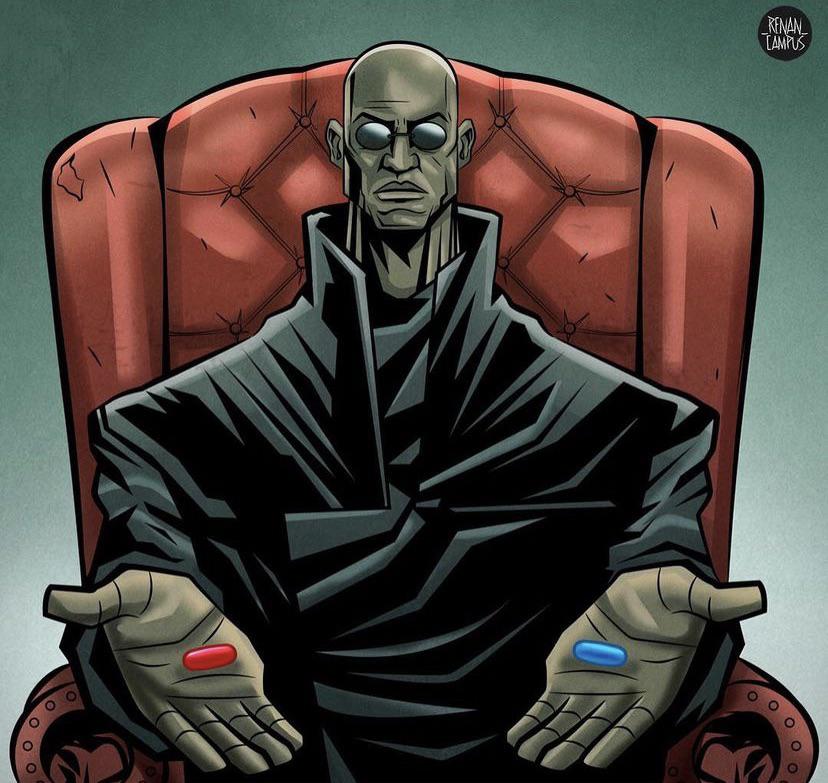
Enlightenment isn’t about logging out of the system. It’s about debugging it from within. It’s realizing that the world, with all its chaos, heartbreak, and beauty, is not against you — it’s a reflection of you. When you operate from that awareness, you no longer resist the Matrix. You flow with it. The illusion loses its grip not because it disappears, but because you stop mistaking it for the whole truth. You see it for what it is — temporary, purposeful, sacred. At that moment, the game transforms. Pain turns into wisdom. Desire turns into direction. Every challenge becomes a level in your evolution. And in the end, you don’t escape the Matrix — you outgrow it. So, instead of hating the Matrix, perhaps we should learn to live well within it. Love deeply. Create sincerely. Play consciously. Because if you can’t find peace in illusion, how will you ever handle the truth beyond it? After all, enlightenment isn’t about running away from the Matrix — it’s about realizing you were the coder all along.
By Harion Ravens