The Light I Found in Christ
As an Indian coming from a land where spirituality feels almost woven into daily life, where thousands of gods and forms of the divine coexist in stories, rituals, and lived experience, I’ve always had a natural openness toward different expressions of God. In that space, I find myself feeling a very deep and personal connection to Jesus Christ. There is something about his presence that feels steady to me—like a pure, stable white light that doesn’t change with circumstances. I experience his energy as healing, something that has quietly helped me move through past difficulties, clear inner heaviness, and grow in ways I didn’t fully understand at the time. For me, spirituality is not about separating traditions, but about recognizing the divine beyond labels, beyond nationality, beyond time itself. In the same way I’ve felt drawn to Jesus Christ, I also feel a similar inner connection when I think of Krishna and Shiva—not as distant historical figures, but as living expressions of divine consciousness that speak to something deeper within me. Over time, what has become more important to me is not the origin or identity of any divine figure, but the experience of that presence itself—the way it feels, transforms, and quietly guides inner life.
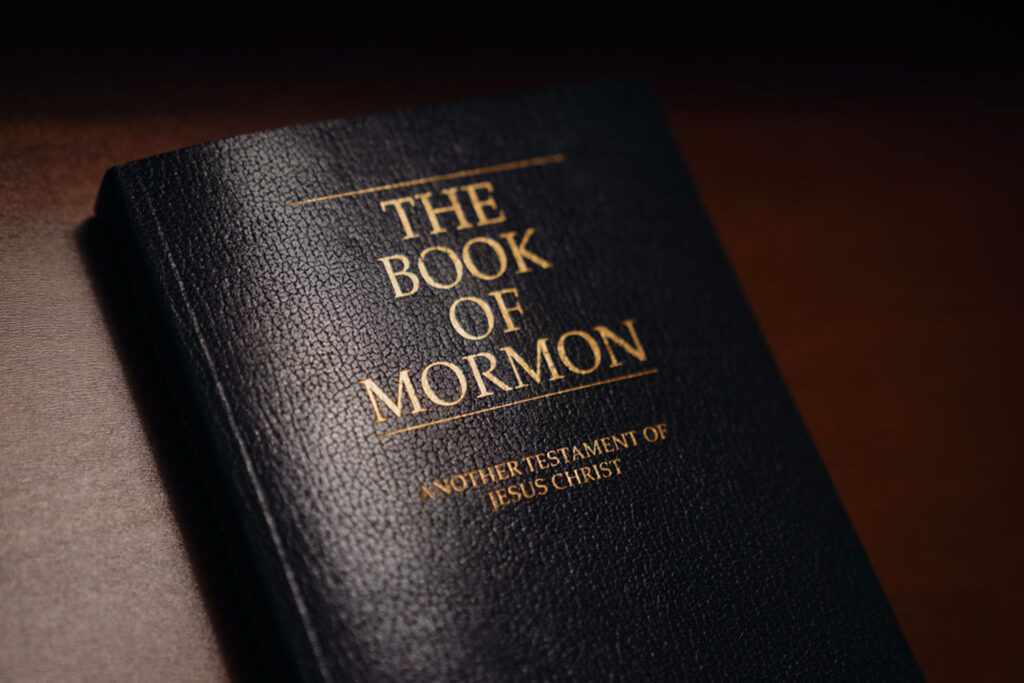
At some point in my search, I began looking for something that could help me understand Jesus more deeply, not just intellectually but experientially. I didn’t expect much, but life has a way of surprising me. One thing led to another, and I was introduced to the Book of Mormon through missionaries from the Church of Jesus Christ of Latter-day Saints. What surprised me most was not just the book itself, but the fact that I had never even heard of it until I was 27 year old. It felt strange, almost like something significant had been quietly present in the world while I had no awareness of it.
In the account associated with the Church of Jesus Christ of Latter-day Saints, the Book of Mormon is described as a record compiled by ancient prophets who lived in the Americas. One of the central figures in this narrative is a prophet named Mormon, who is said to have gathered, edited, and condensed earlier sacred records of his people into a single work. His son, Moroni, is described as the final contributor who completed the record, sealed it, and buried it in a hill in what is now the United States before his death.
Centuries later, in the early 1800s, a man named Joseph Smith reported that he was guided by an angel named Moroni to this buried record. In his account, he translated the golden plates into English in a relatively short period of time, describing the process as being made possible through divine assistance. From this translation emerged the Book of Mormon as it is known today.
Following this, a religious movement developed that became the Church of Jesus Christ of Latter-day Saints. Over time, it expanded from a small group of early followers into a global church with millions of members across many countries.
In this tradition, the Book of Mormon is viewed as a companion scripture to the Bible, and both texts are read together as witnesses of spiritual teachings such as faith, repentance, forgiveness, and the relationship between God and humanity.

As I began reading, I found myself genuinely surprised by how it affected me. There were chapters that felt so rich that I couldn’t move forward easily because I kept going back, rereading the same passages again and again. It felt like the text carried multiple layers of meaning, and depending on my state of mind or what I was going through in life, I would see something slightly different each time. At times it almost felt personal, like it was responding to where I was emotionally or mentally, offering guidance without directly telling me what to do. It wasn’t just spiritual—it also gave me a strange clarity about life, relationships, and even the way human societies rise and fall, which made me reflect on broader things like modern geopolitics in unexpected ways.
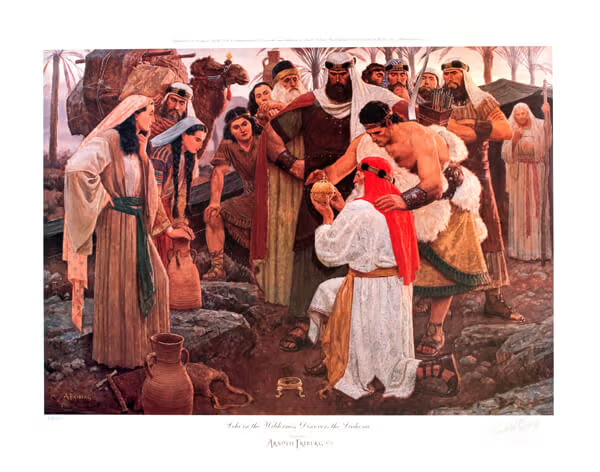
One of the elements that stayed with me deeply was the story of the Liahona. The idea of a guiding instrument given to a traveling family in the wilderness felt symbolic to me. It wasn’t just about physical direction; it seemed to represent how guidance in life appears when there is alignment, intention, and openness. I saw it as something that reflected inner states—how clarity seems to come when I am receptive, and how confusion increases when I am disconnected or distracted. In that sense, it felt less like an external object and more like a reflection of an inner compass.
Also, something that felt personally meaningful happened around the time I first met the missionaries from Church of Jesus Christ of Latter-day Saints. At that time, I had already started visiting a church building to learn more and “investigate” what it was about, without really knowing much about the surrounding area or where I would end up living next.
What made it even more interesting for me was that, completely unrelated to that decision, I had already signed a lease for a new house—without realizing that it was literally on the next street from that same church I was visiting. I only discovered this later, and when I did, it honestly felt surprising and meaningful at the same time.
For me, it naturally connected with the idea of the Liahona from the Book of Mormon narrative—the idea of guidance unfolding step by step, often without seeing the full picture at once. I didn’t plan the connection between where I was moving and the place I had already started exploring spiritually, but looking back, it felt like things aligned in a way I only understood after the fact, as if direction had been revealed gradually rather than all at once.
As I read further, I came across stories that stayed with me for their emotional depth and human truth. The transformation of individuals who go from resistance to deep change made me think about my own inner shifts over time. The accounts of journeys through uncertainty, building things despite doubt, and finding strength in moments of pressure felt strangely familiar. There were also cycles described in societies—periods of peace followed by pride, conflict, and decline—that made me reflect on patterns I see in the world today. Rather than feeling like distant ancient stories, they sometimes felt like mirrors of human behavior that continue even now.
What I found most striking is how often I ended up rereading passages, not because I didn’t understand them, but because they seemed to mean more than one thing at once. The same chapter could feel like it was speaking to me differently depending on what I was going through. Over time, I began to understand why many readers describe it as a living text—not in the literal sense, but in the way it seems to unfold meaning gradually rather than all at once.
Through this experience, I’ve come to see my spiritual journey less as choosing between traditions and more as allowing different expressions of the divine to speak in different ways. The Church that shares this text, the Church of Jesus Christ of Latter-day Saints, presents it as scripture alongside the Bible, but for me personally, it has also become part of a broader search for meaning, healing, and understanding.
In the end, what stays with me is not just the book or the stories, but the feeling that spiritual truth often meets us in unexpected ways. Sometimes it arrives quietly, through a conversation or a chance encounter, and sometimes it opens doors in us that we didn’t even realize were closed.
By Harion Ravens